

Buying property in Dubai can feel straightforward at first. The property is usually the easy part. The bigger question is how to finance it in a way that fits your budget, residency status, and long-term plans.
This guide walks through the main financing options in Dubai, including conventional mortgages, Islamic home finance, developer payment plans, refinancing, and the costs buyers often forget to include.
Dubai Mortgage Market
Dubai’s mortgage market remains active, with banks and Islamic lenders offering products for residents and, in some cases, non-residents.
Rates depend on market conditions and the lender’s own pricing. Banks also look at your income, deposit size, loan term, and whether you choose a fixed, variable, or hybrid structure.
One thing many buyers overlook is that closing costs usually need to be paid separately. That means fees such as the DLD transfer fee, agency commission, trustee charges, and mortgage-related costs should be budgeted in cash.
For an AED 2 million apartment, an 80% mortgage may still leave the buyer needing roughly AED 140,000 to 180,000 in fees and closing costs on top of the AED 400,000 deposit. In other words, the deposit is only part of the cash you need.
Conventional Mortgages
Conventional mortgages are the most common way to finance ready properties in Dubai’s freehold areas. They are available from major UAE banks and some international lenders.
Who qualifies
Banks usually look at your age, job type, monthly income, debt level, credit history, nationality, and the property itself. Salaried applicants with clean documents are usually approved faster than self-employed buyers.
The property must also meet the lender’s standards and pass valuation.
Residents vs non-residents
Residents usually get better mortgage terms than non-residents. For expats living in the UAE, lenders are often more flexible on loan size, especially for a primary residence.
For investment properties or second homes, the down payment is usually higher. Non-residents may face stricter lending criteria and higher deposit requirements.
In both cases, the final mortgage amount depends on more than just residency status. Banks also look at income, debt burden, property type, and overall affordability before approving the loan.
Fixed, variable, and hybrid
Fixed-rate mortgages give you predictable payments for a set period. That can be useful if you want stability and easier monthly budgeting.
Variable-rate mortgages can start lower, but the payment may change over time. Hybrid products begin with a fixed period and later move to a floating rate.
The right choice depends on how long you plan to hold the property and how much payment certainty you want.
Pre-approval
Getting pre-approval before you start searching is one of the best moves a buyer can make. It gives you a clear borrowing limit and makes your offer stronger when you find the right property.
The process usually involves income documents, bank statements, ID, and details of any existing loans. Once you choose a property, the lender normally arranges a valuation before final approval.
Islamic Home Finance
Islamic home finance is widely available in Dubai through Islamic banks and Islamic windows within conventional banks. It is used by buyers who want Sharia-compliant structures, as well as by buyers who simply prefer asset-based financing.
Murabaha
Under Murabaha, the bank buys the property and sells it to the buyer at an agreed profit margin. The total repayment amount is fixed at the start, which gives the buyer clarity on the full cost.
This structure is simple, but the early settlement and restructuring terms should still be checked carefully.
Ijara
Ijara works like lease-to-own financing. The bank owns the property, leases it to the buyer, and transfers ownership at the end of the term.
It is easy to understand, but buyers should review the ownership transfer process, fees, and early exit terms before signing.
Diminishing Musharaka
In Diminishing Musharaka, the bank and the buyer co-own the property at first. The buyer gradually buys out the bank’s share over time.
This structure gives a clear view of how ownership builds and can be attractive to buyers who want transparency.
For most buyers, the key question is which option offers the better total cost and flexibility.
Off-Plan Financing
Off-plan properties are financed differently from ready homes. Instead of taking a full mortgage from the start, most buyers use developer payment plans that spread the cost across the construction period.
These plans usually begin with a deposit of around 10% to 20%. After that, payments are spread across construction milestones or fixed dates. Some developers also offer post-handover plans, where part of the price is paid after completion. This can help buyers manage cash flow, especially if they expect rental income later.
The main advantage is flexibility. The main risk is that buyers need to follow the payment schedule carefully and make sure the project, developer, and handover timeline all fit their plan.
Key things to check:
- Payment schedule
- Cancellation terms
- Handover timeline
- Penalties for delays or missed payments
If you want a deeper breakdown of off-plan payment terms, how to protect yourself, and what to check before signing, read our full guide: [Off-Plan Property Guide].
Bank financing for off-plan
Some banks do finance off-plan purchases, but approval is usually stricter than for ready homes. Lenders look at the developer, the project stage, and whether the unit qualifies.
Not every off-plan property can be financed. If you plan to switch to a mortgage at handover, confirm that option early.
What to check
Before signing, check the developer’s registration, the escrow account, the payment milestones, and the expected completion timeline. Buyers should also review the escrow structure and expected completion timeline carefully.
Buy-to-Let Financing
Dubai continues to attract investors because of rental demand and the absence of personal income tax on rent in the UAE. That said, gross yield is only the starting point.
A buy-to-let investor should also factor in mortgage costs, service charges, vacancy periods, maintenance expenses, and management fees. These can have a big impact on the real return, especially in the early years.
For example, a Dubai Marina apartment earning AED 80,000 in annual rent on a AED 1.2 million purchase may show a gross yield of about 6.7%. The actual net return will be lower once all costs are included.
Banks also assess buy-to-let borrowers on repayment ability, debt levels, and income stability. Non-residents may face extra checks on the source of funds, currency exposure, and income consistency.
Refinancing and Equity Release
Refinancing can be useful if it lowers your monthly payment or reduces your overall borrowing cost enough to justify the switching fees. It may also make sense if your financial position has improved since you first took the loan.
Equity release allows a property owner to unlock some of the value in an existing Dubai property and use it for another purchase or investment. This can be helpful in areas that have seen strong price growth.
The key is to compare the benefit against the total cost of switching. If the numbers do not work, refinancing is not worth it.
Costs Buyers Miss
Many buyers focus on the deposit and underestimate the rest of the cash needed to close the deal. In Dubai, the transaction costs can be high.
| 0.25% of the loan amount + AED 290 | Typical amount | Notes |
| DLD transfer fee | 4% of property price | Usually paid by the buyer |
| Agency commission | About 2% + 5% VAT | Sometimes negotiable |
| Trustee office fee | About AED 4,000 to AED 5,500 | Fixed administrative charge |
| Mortgage registration | 0.25% of loan amount + AED 290 | If financing |
| Property valuation | About AED 2,500 to AED 3,500 | Required by most lenders |
| Bank processing fee | Varies | One-time lender fee |
| Mortgage protection insurance or Takaful | Varies | May be required |
| Service charges | Varies by community | Ongoing ownership cost |
| Legal support | Optional | Useful for complex or off-plan deals |
In many cases, total acquisition costs fall somewhere around 7% to 9% of the purchase price, depending on how the deal is structured.
Broker or Bank
Many buyers use mortgage brokers because brokers can compare several lenders and help manage the application process. This is especially helpful for non-residents, self-employed buyers, or anyone with a less standard income setup.
Going directly to a bank can also work well, especially if you already have a strong banking relationship in the UAE. The main goal is to compare options before choosing a loan.
Buyers should compare not only interest rates, but also processing fees, valuation fees, early settlement charges, and the flexibility of the financing structure
Foreign Buyers
Dubai is open to foreign buyers, and local banks are used to working with overseas income and documentation. The process is manageable, but it does require good organisation.
UK buyers are often asked for payslips or business accounts, tax returns, bank statements, proof of address, and ID. Because income may be in GBP while repayments are in AED, exchange rate changes can affect the real cost over time.
European and Asian buyers usually face similar checks, especially if income is self-employed or spread across more than one country. GCC buyers often move through the process more smoothly, but source-of-funds checks still apply.
The most common issues are inconsistent documents, short job history, high debt, and weak bank statements. A clean file usually makes approval faster and easier.
Financing by Community
Different parts of Dubai attract different buyer types, so the right financing approach can vary too.
Dubai Marina
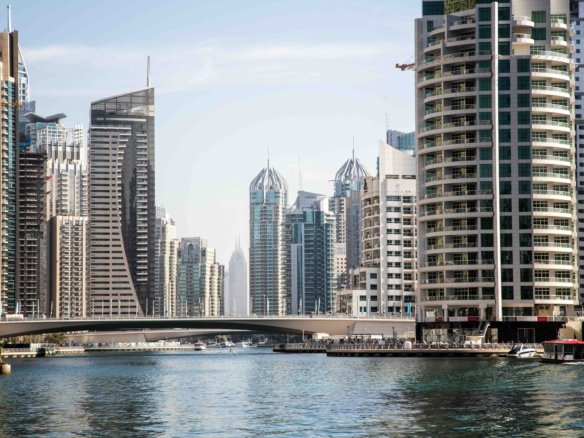
Dubai Marina is popular with investors who want rental income and liquidity. Buyers here often focus on affordability, mortgage cost, and projected net yield.
Jumeirah Village Circle
JVC attracts buyers looking for lower entry prices and strong rental demand. Financing is often used to increase leverage while keeping monthly costs manageable.
Downtown Dubai
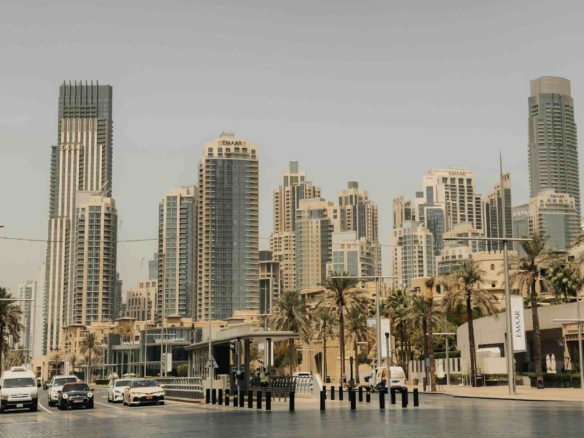
Downtown Dubai appeals to buyers who value prestige, strong demand, and long-term capital growth. Financing decisions here are often driven more by wealth preservation than by rental yield.
Dubai Hills Estate
Dubai Hills Estate is popular with families and long-term buyers. Many prefer stable payments and manageable monthly costs.
Palm Jumeirah
Palm Jumeirah sits in the luxury segment. Financing is available, but many buyers in this area care more about asset quality and exclusivity than high leverage.
Golden Visa
Property ownership can support eligibility for the UAE Golden Visa, making real estate an attractive option for buyers who value both investment potential and long-term residency benefits.
However, Golden Visa rules can change and should always be verified through official channels before making a purchase decision. Buyers should pay particular attention to qualifying property values, ownership structures, and any requirements relating to financed or jointly owned properties.
For a detailed breakdown of eligibility requirements, qualifying investment thresholds, and the application process, read our guide: Golden Visa in Dubai: A Comprehensive Guide.
Buyer Scenarios
| Buyer profile | Common route | Main consideration |
| UAE resident, salaried | Conventional or Islamic mortgage | Better pricing and easier documentation |
| Non-resident investor | Conventional mortgage or developer plan | Higher deposit and more cash needed |
| Yield-focused investor | Mortgage with a cash-flow model | Focus on net yield, not gross rent |
| Off-plan buyer | Developer plan, then mortgage if eligible | Confirm handover financing early |
| Sharia-conscious buyer | Murabaha, Ijara, or Diminishing Musharaka | Compare cost and exit terms |
| Short-term resident | Fixed-rate mortgage or developer plan | Payment certainty matters most |
Example Case
Consider a UK investor buying a one-bedroom apartment in Dubai Marina for AED 2.5 million using non-resident financing.
| Item | Amount |
| Property price | AED 2,500,000 |
| Deposit at 25% | AED 625,000 |
| DLD transfer fee at 4% | AED 100,000 |
| Agency fee at 2% | AED 50,000 |
| VAT on agency fee | AED 2,500 |
| Trustee fee | About AED 4,200 |
| Mortgage registration fee | About AED 4,978 |
| Property valuation fee | About AED 3,000 |
In this case, the buyer should expect to need well over the deposit amount in available cash before completion. The exact figure depends on lender fees, valuation, and the final transaction structure.
How Luxe Nautilus Realty Can Help
Choosing a financing option is not simply a matter of finding the lowest interest rate. The right structure depends on factors such as residency status, investment objectives, expected holding period, cash flow requirements, and the type of property being purchased.
For example, the financing strategy that makes sense for a non-resident investor buying a rental apartment in Dubai Marina may be very different from that of a family purchasing a long-term home in Dubai Hills Estate or a buyer considering an off-plan investment with a post-handover payment plan.
Luxe Nautilus Realty helps buyers evaluate these decisions before they commit to a purchase. This includes reviewing financing options, assessing acquisition costs, comparing payment structures, and helping buyers understand how financing may affect the long-term performance of their investment. Obtaining the right advice early in the process can help avoid costly mistakes and provide greater confidence throughout the transaction.
If you would like personalised guidance on financing, investment planning, or property acquisition in Dubai, contact us for a no-obligation consultation.
Rate information is based on publicly available UAE lender products and Central Bank benchmark data, current as of mid-2026. Individual mortgage terms depend on applicant profile, property type, and lender underwriting. All fee estimates are derived from Dubai Land Department official fee schedules and current market practice. Buyers should verify specific terms with their chosen lender before committing to a purchase.