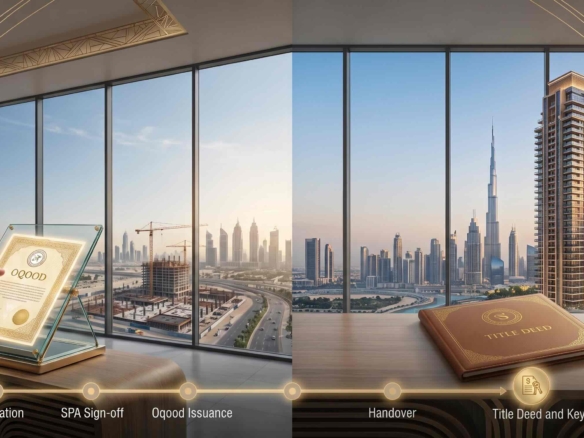


Buying a property in Dubai can be one of the biggest financial commitments you make.
Yet many buyers reach the Sale and Purchase Agreement (SPA) after spending weeks or months researching the property, only to skim through the contract and rely on what the developer or the property agent has told them. That can be an expensive mistake.
The SPA is the contract that governs your purchase. It sets out how much you pay, when payments are due, what property the developer or seller must deliver, when completion or handover is expected, and what happens if either party fails to meet its obligations.
For a document that can have such significant financial consequences, it deserves more than a quick signature.
This guide explains what an SPA is, where it fits into the Dubai property buying process, which clauses deserve your closest attention, what you may be able to negotiate, and the red flags to look for before signing.
If a developer or agent makes a promise that is important to your decision, make sure it is reflected in the SPA, its schedules, or a signed addendum. Verbal assurances, marketing material and informal messages may be difficult to rely on if they are not incorporated into the contractual documents.
What Is a Sale and Purchase Agreement?
A Sale and Purchase Agreement (SPA) is the contract that formally sets out the terms of a property purchase.
For an off-plan purchase, the SPA is between the buyer and the developer. For a ready property purchased from an existing owner, the transaction typically involves the Dubai Land Department‘s standard Form F, together with other required documents and agreements.
The SPA sets out the key terms of the transaction, including:
- Purchase price and payment obligations
- Payment schedule and applicable instalments
- Property details and specifications
- Completion or transfer arrangements
- Responsibilities of the buyer and seller or developer
- Default and termination provisions
- Handover requirements
- Dispute resolution procedures
- Restrictions affecting the property, where applicable
In simple terms, this is the document that turns the agreed property deal into a contractual commitment. Once signed, the parties are generally bound by its terms, subject to the rights and remedies provided by the contract and applicable Dubai law.
Off-Plan vs Secondary-Market Purchases
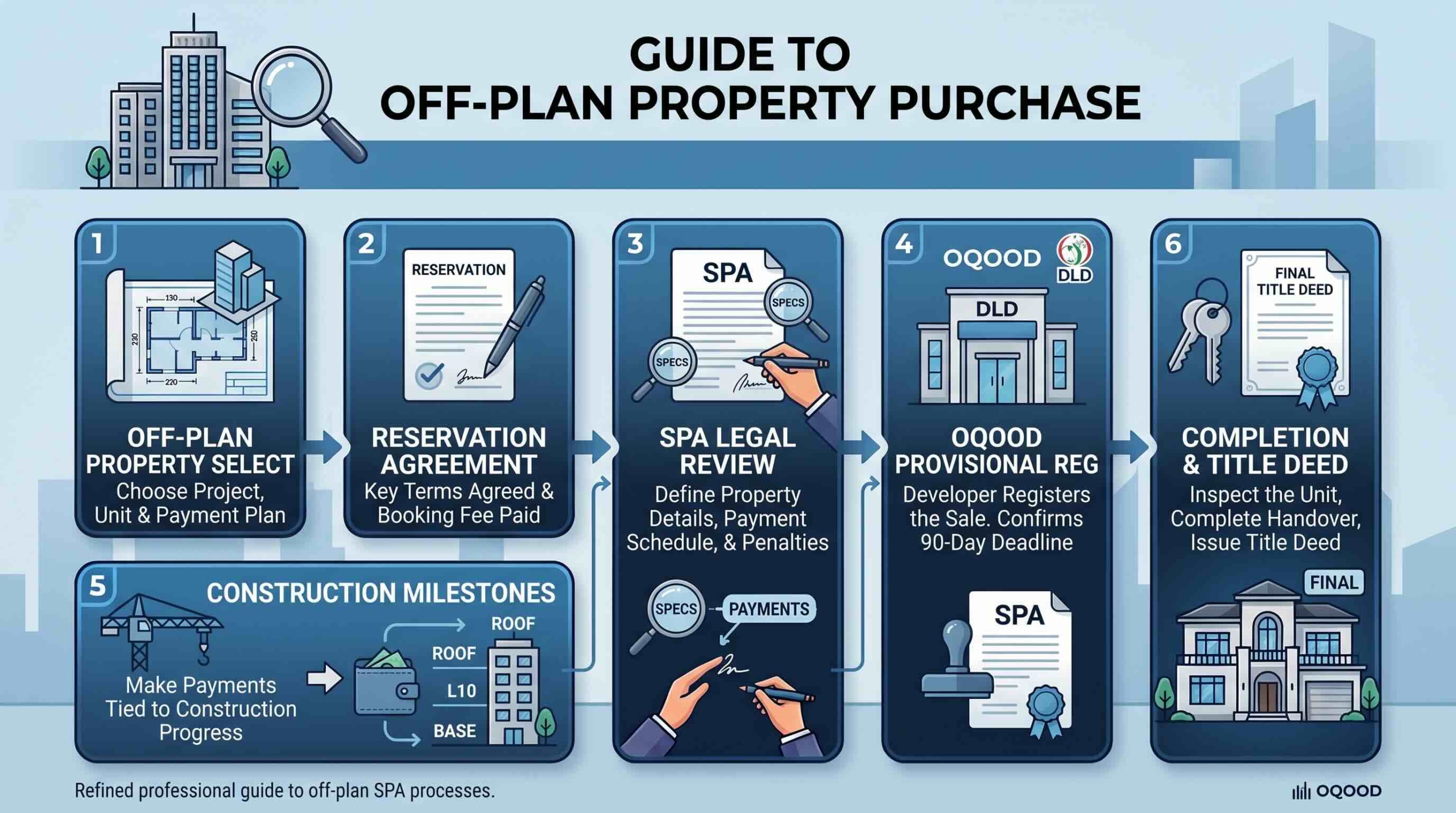
A ready property can be purchased directly from a developer or from an existing owner, while an off-plan property can also be resold by its original buyer before completion. The process and documents can differ in each case.
Buying an Off-Plan Property
Buying a Ready Property
The steps are different for this type of property:
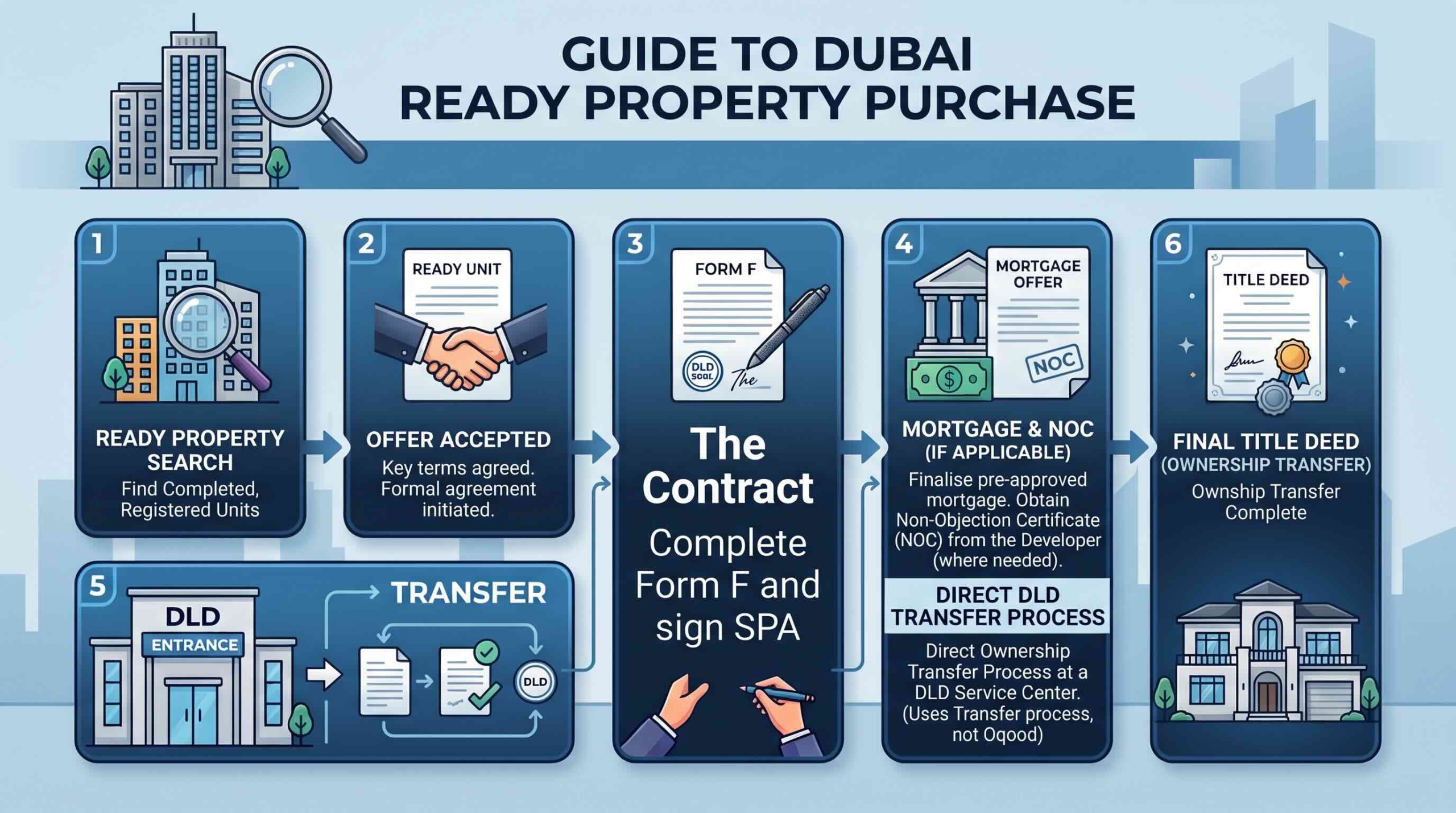
For a completed property with a registered title deed, the transaction proceeds through the DLD ownership transfer process rather than the off-plan Oqood registration process.
The 10 SPA Clauses Every Buyer Should Understand
Not every clause in a Sale and Purchase Agreement carries the same level of risk. Some deal with routine legal wording, while others can affect your finances, your timeline, and your ability to protect your investment.
1. Payment Schedule
The payment schedule is one of the most important parts of your SPA because it determines when you must pay and what triggers each payment.
Most off-plan developments use one of two payment structures:
- Construction-linked – Payments are tied to construction milestones. For example, you pay when the foundation is completed or when the building reaches a certain stage.
- Time-linked – Payments are due on fixed dates, regardless of how much construction has been completed.
Before signing, ask the developer to confirm in writing whether your payment plan is construction-linked or time-linked. This simple question can significantly affect your financial risk.
2. Completion Date and Grace Period
The SPA includes an Anticipated Completion Date (ACD), but this is rarely the whole story.
Many contracts also include a grace period, giving the developer additional time to complete the project before certain buyer remedies become available. Many buyers focus on the advertised handover date and overlook this clause. In reality, the grace period often determines when you can take action if the project is delayed.
A grace period longer than a year may give the developer considerable flexibility. Also, check whether the SPA provides any compensation or other remedy if handover is delayed.
3. Property Specifications
One of the most common causes of disputes is when the finished property differs from what the buyer expected.
Your SPA should clearly identify:
- Unit number
- Floor
- Plot number
- Floor area
- Parking allocation
- Floor plan
- Finishing specifications
- Fixtures and fittings
The SPA is the document that defines what the developer is legally required to deliver. Buyers sometimes assume that showroom finishes or sales brochures form part of the agreement. Unless these specifications are incorporated into the SPA or its schedules, they may not be legally enforceable.
Before signing:
- Check that the floor plan matches the unit you selected.
- Confirm that any promised parking space is included.
- Verify that the finishing specifications match what you were shown.
4. Buyer Default and Termination
Missing a payment does not necessarily allow a developer to terminate the contract immediately. The applicable legal process allows the buyer to remedy the default. However, buyer default can still have significant financial consequences.
Depending on the stage of construction, a developer may be entitled to retain part of the money you have already paid. The amount depends on the project’s completion percentage and is governed by Dubai property legislation. Stopping your instalments because construction appears slow can itself place you in breach of the SPA. Always seek legal advice before withholding payments.
5. Force Majeure
A force majeure clause explains what happens if an extraordinary event prevents either party from fulfilling the contract. Read this clause carefully. Some contracts use unusually broad wording that could allow developers to justify delays for reasons that might otherwise be avoidable.
Depending on the wording of the SPA and applicable law, examples may include:
- Natural disasters
- War
- Government restrictions
- Other genuinely unforeseeable events
Events such as the following would not normally constitute force majeure simply because they make performance more difficult:
- Falling property prices
- Difficulty obtaining finance
- Personal financial problems
- Ordinary construction delays
6. Handover and Defects Inspection
Receiving the keys does not necessarily mean the property is fully completed or that you have accepted all defects. Before handover, inspect the property carefully and prepare a list of any defects or unfinished work.
Check for problems with finishes, doors and windows, plumbing, electrical systems, air conditioning, appliances and fixtures. Photograph any issues and keep a written record of what you report.
Check your SPA for:
- The inspection and snagging period
- The developer’s deadline for fixing defects
- What happens if defects are not rectified
- The consequences of accepting or refusing the handover
7. Defect Liability
Even after handover, developers remain responsible for certain defects. Ask the developer exactly what is covered after handover and how defects should be reported.
Dubai law provides statutory protection for certain defects. Developers remain liable for 10 years from the project’s completion certificate for defects in structural components, and for 1 year for defects in mechanical, electrical, sanitary, and plumbing installations, subject to applicable law. Many developers also offer an additional customer care period for cosmetic defects, although this is a commercial commitment rather than a legal requirement.
8. Termination Rights
Your termination rights depend on the SPA, the applicable Dubai property laws, and the circumstances of the dispute. Before signing, make sure you understand when you can terminate, what happens to payments already made, and whether compensation may be available.
9. Usage Restrictions
Many buyers plan to generate rental income from their property, but not every development allows the same level of flexibility. If your investment strategy depends on renting or selling the property before completion, confirm that the SPA and applicable property rules allow it. Just because another owner in Dubai can operate a holiday rental does not mean your development permits it.
Some SPAs include restrictions on:
- Short-term rentals (such as Airbnb)
- Holiday homes
- Resale before completion
- Property alterations
- Commercial use
10. Dispute Resolution
Most buyers never expect a dispute, but it is still worth understanding how disagreements are handled. Depending on the nature of the dispute, parties may first seek an amicable settlement through the Dubai Land Department before proceeding to formal court or arbitration proceedings.
If a settlement cannot be reached, the dispute may proceed to the Dubai Courts or, where the SPA requires it, to arbitration.
Six SPA Red Flags Every Buyer Should Know
The clauses above explain how your SPA works. The red flags below are the specific warning signs that should make you pause before signing. If you spot any of them, ask questions or consider having the SPA reviewed by a UAE-qualified property lawyer.
1. No Compensation for Delayed Handover
Check what remedies are available if the developer misses the contractual completion date. If the SPA is silent on delay compensation, make sure you understand what other remedies may be available.
2. An Unusually Long Grace Period
While grace periods are standard, one that extends well beyond a year deserves scrutiny. Understand when you can actually take action if the property is delivered late — not just the advertised completion date.
3. Vague Property Specifications
If important details such as floor area, parking allocation, floor plans, or finishing specifications are vague or missing, resolving disputes later becomes much more difficult. Compare the SPA against the sales brochure, floor plans, and any written promises before signing.
4. Broad Force Majeure Wording
As explained in Clause 5, a force majeure clause should cover genuinely exceptional events. If the wording appears unusually broad, it may give the developer greater flexibility to justify delays. Ask for clarification if the clause includes terms that seem vague or open-ended.
5. Restrictions That Affect Your Investment Plans
As covered in Clause 9, some developments restrict short-term rentals, resale before completion, or certain types of property use. If your investment strategy relies on Airbnb income or on selling before handover, make sure the SPA allows you to use the property as you intend.
6. Pressure to Sign Quickly
Buying property should never feel rushed. If you are being pressured to sign immediately without enough time to read the contract or seek independent advice, slow the process down. Never sign an SPA simply because you are told an offer will disappear within hours. An independent legal review may cost a few thousand dirhams, but that is small compared with the potential cost of signing a contract you do not understand.
What You Can and Cannot Negotiate
Many buyers assume the SPA is either completely negotiable or completely fixed. The reality is somewhere in between. Developers are often willing to negotiate commercial terms, particularly if you are buying early in a project, purchasing multiple units, or buying during a promotional campaign.
Often Negotiable
These are the terms developers are most likely to adjust:
- Payment plans – You may be able to negotiate different instalment milestones, lower upfront payments, or extended post-handover payment plans.
- Purchase price or incentives – Rather than reducing the headline price, developers often offer fee waivers, cashback, or other financial incentives.
- Upgrades and finishing packages – Premium flooring, kitchen appliances, smart home features, or upgraded interiors may be available, especially for early buyers.
- Furniture packages – If the property is offered furnished, ask whether the package can be upgraded, customised, or discounted.
- Parking spaces – Additional or premium parking spaces can sometimes be negotiated at a reduced cost.
- Service charge incentives – Some developers offer service charge waivers or capped increases for the first few years after handover.
Usually Fixed
These items are generally less open to negotiation because they are governed by law or form part of the developer’s standard contract. When a developer says the SPA is “non-negotiable”, they are usually referring to this category — not the commercial terms above.
- Dubai Land Department fees and statutory government charges
- Escrow account requirements for off-plan purchases
- Minimum defect liability periods required under Dubai law
- The legal framework governing buyer default and contract termination
- The developer’s standard legal clauses, particularly those used across all projects
When Do You Have the Most Negotiating Power?
Buyers often have the greatest leverage:
- During a project’s launch phase
- Towards the end of a developer’s sales targets or financial quarter
- When purchasing multiple units
- In a slower property market, when developers are competing more aggressively for buyers
Once the SPA has been signed, your ability to negotiate is usually very limited. This is why it’s important to agree on commercial terms before committing to the contract.
Common Myths About Dubai SPAs
| Myth | Reality |
| “The SPA is just a formality.” | It is the contract that governs your purchase. Its terms can affect your payments, handover, rights and obligations, so it should never be treated as routine paperwork. |
| “The agent’s verbal promise is enough.” | If an important promise is not reflected in the SPA, its schedules or a signed addendum, you may have difficulty enforcing it later. |
| “I can cancel after signing if I change my mind.” | Signing an SPA creates contractual obligations. There is generally no simple buyer’s cooling-off period that allows you to walk away without consequences. |
| “If the developer delays, I can stop paying.” | Stopping your contractual payments could put you in default even if the project is delayed. Get legal advice before withholding an instalment. |
| “Every developer uses the same SPA.” | Dubai’s property laws provide the legal framework, but developers can use different contracts and commercial terms. Payment schedules, grace periods, restrictions, and other provisions can vary significantly. |
| “Oqood is just a receipt.” | Oqood registration records the off-plan sale in the Dubai Land Department’s provisional register during construction. |
| “The advertised price includes everything.” | Buyers may have additional costs such as DLD fees, registration or administrative charges, agency fees, and other transaction costs. Always ask for the total cost of purchase before signing. |
Conclusion
The SPA is the document that formalises your contractual commitment to the Dubai property purchase. It determines what you pay, when you pay, what the developer or seller is required to deliver, and what happens if something goes wrong.
Before signing, make sure you understand the payment schedule, completion date, grace period, property specifications, default and termination provisions, usage restrictions, and your rights if the transaction does not go as planned.
Read the agreement carefully, make sure important promises are documented, and negotiate the commercial terms where possible. If you are unsure about any provision, consider having the SPA reviewed by an independent UAE-qualified property lawyer before signing.
The time spent understanding the contract can be far less costly than discovering its consequences after you have signed it.
This article is for general guidance only and should not be considered as legal advice. If you are unsure about any part of an SPA, seek advice from a UAE-licensed legal professional before signing.
This article was last updated in August 2026. Laws and regulations may change. Always verify current requirements with the DLD, RERA, or a qualified UAE-licensed legal advisor before making any property purchase decision.